

 Share
Share Print
PrintAli Fujino
Discourse-Issue-22
All photos provided by Melanie Walker.
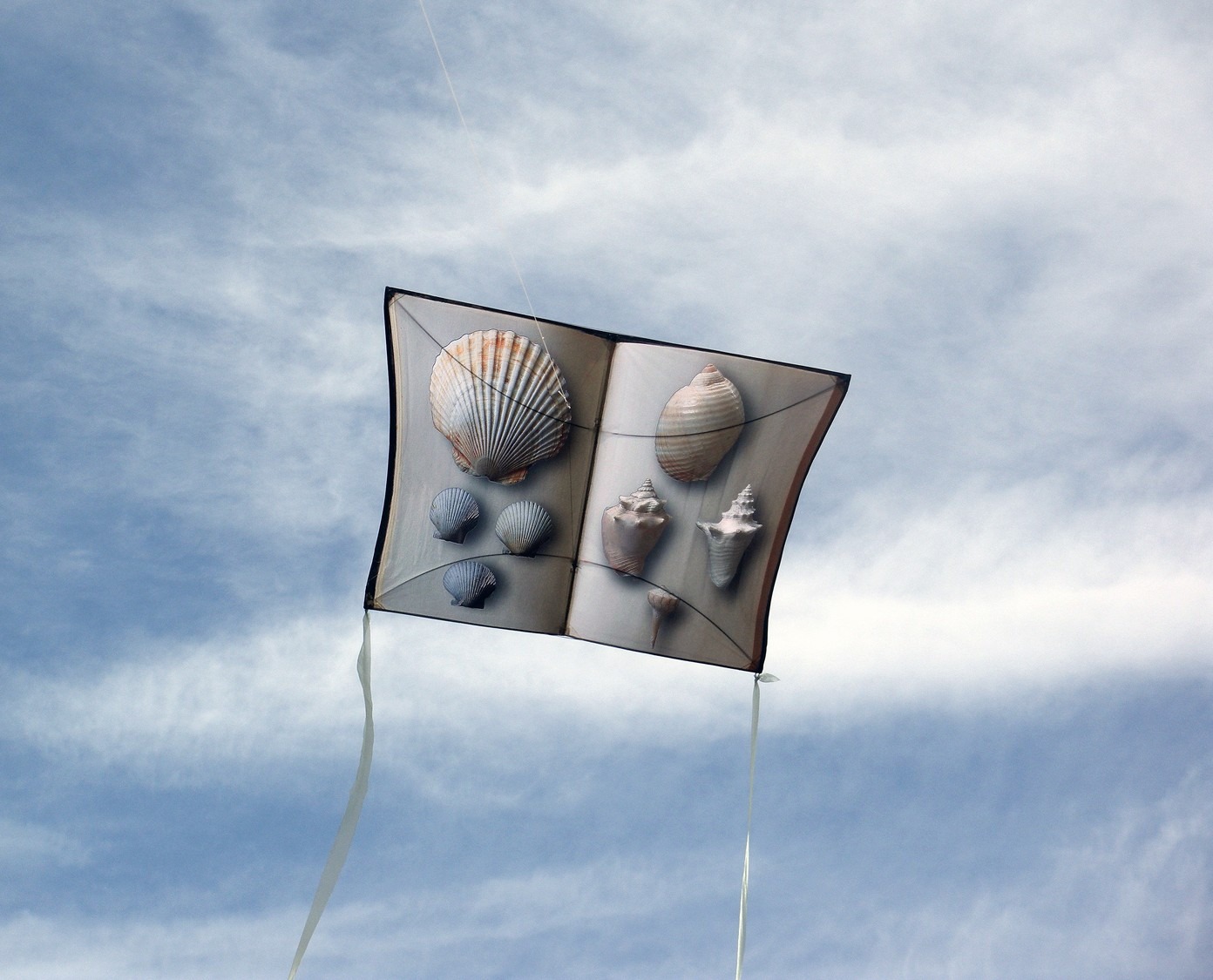
A beautiful kite created by Colorado artist Melanie Walker.
YOU MAKE YOUR RESIDENCE IN BOULDER, COLORADO. HOW DID YOU GET THERE, AND WHAT’S A DAY LIKE IN BOULDER?
I moved to Boulder in 1992 when I was hired in a tenure track position in the photography area of the art department at the University of Colorado at Boulder. I had been teaching for about 18 years at that point at a number of universities around the U.S. but could never find a place to stay. I wanted to be in the west and it worked out.
A typical day in Boulder is usually jam- packed with scheduled boring stuff and counter-balanced with lots of curiosity. I have always been pretty inclined toward art and science so from cooking in the kitchen to working in the darkroom to making a kite, science and art are usually at the core of what happens in a day.
Right now I am in the process of trying to grow food from scraps. Kind of like exploring reincarnation in a funny way, if that makes any sense. So far there has not been a harvest but a lot of interesting pictures and lots of lettuce seeds. We have tried fennel, celery, lettuce, turnips, radishes, and all sorts of stuff that would generally go into the compost.
WHAT WAS YOUR CREATIVE CHILDHOOD LIKE?
I was brought up in an art family so I had nothing but encouragement for my artistic endeavors. I usually made stuff alongside my father, Todd Walker (www.toddwalkerartist.com), who was my primary role model and mentor. He was self-taught so I had this model of if you wanted to do something, just go do some research and then think with your hands by making whatever it was you were curious about. I recall vaguely when I saw someone embroider I went home and started sewing thread into paper. My parents encouraged that sort of inquisitiveness.
My mother, Betty, was an amazing seamstress. She designed clothes for people, especially my sister and myself, and would make special items for my dad’s advertising photo shoots. She had a passion for sewing and unfortunately lived in that cultural era where she was not able to develop it as “her” art, as the world of creativity was often a “male’s” domain. It was her passion and talent that I brought forth into my work. Most of my career in art has been concentrated on merging photographs with sewing.
WHO ARE YOUR HEROES?
My dad. Annette Messager. Anais Nin. Emily Dickinson (who I share a birthday with). Rebecca Solnit. I don’t know, there are so many.
IS THERE SOMETHING THAT AN ARTIST SHARED WITH YOU THAT YOU HAVE CARRIED WITH YOU IN LIFE?
That rules are made to be broken, and Never Stop Working.
WHAT WAS YOUR FAVORITE BOOK AS A CHILD?
I think it was The Phantom Tollbooth by Norton Juster. I loved that there were countries called Digitopolis and Dictionopolis. And the Island of Conclusions which you could only access by jumping. I loved the puns and the plays on words.
WHAT RULES DO YOU LIVE BY?
Do the best you can, and the best you can be is perfectly flawed. And try to leave places better than you found them.
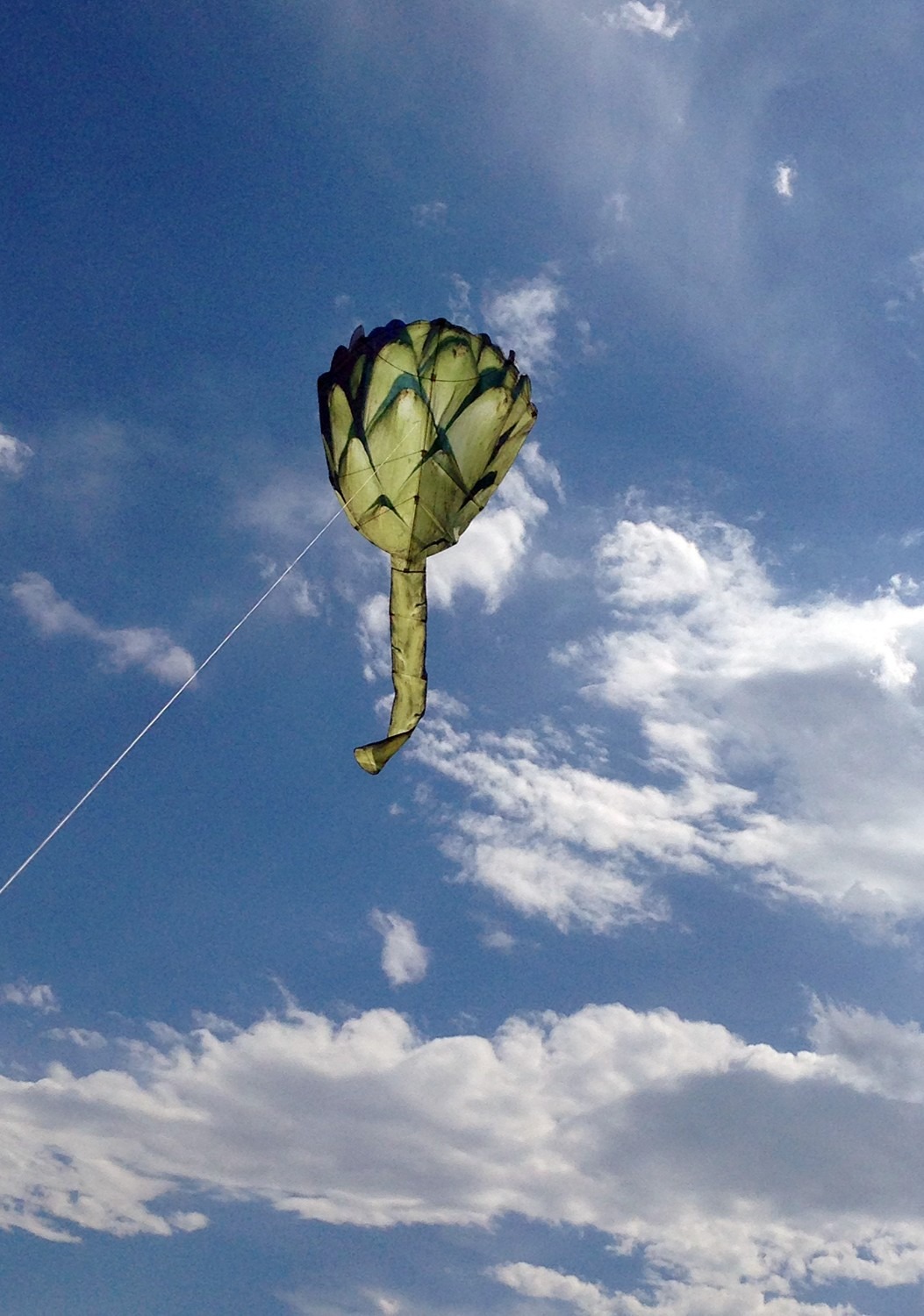
Melanie’s artichoke and cloud kites. “Do the best you can,” she advises, “and the best you can be is perfectly flawed.”
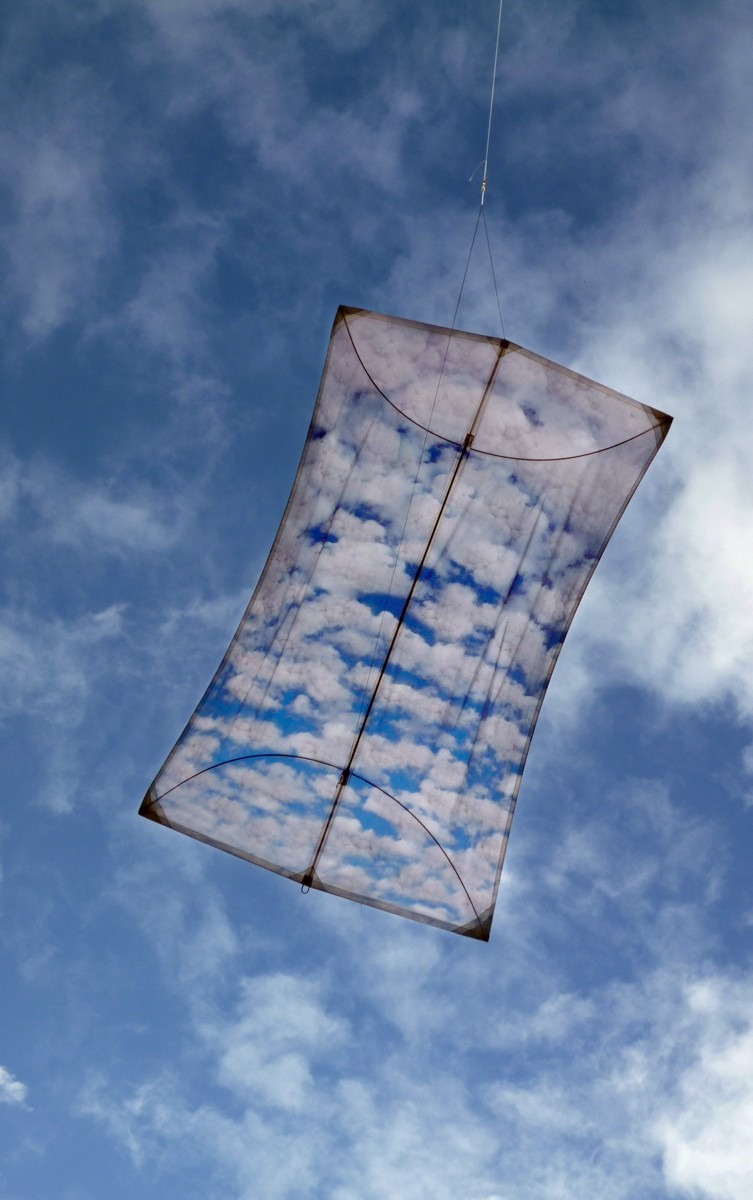
Melanie’s artichoke and cloud kites. “Do the best you can,” she advises, “and the best you can be is perfectly flawed.”
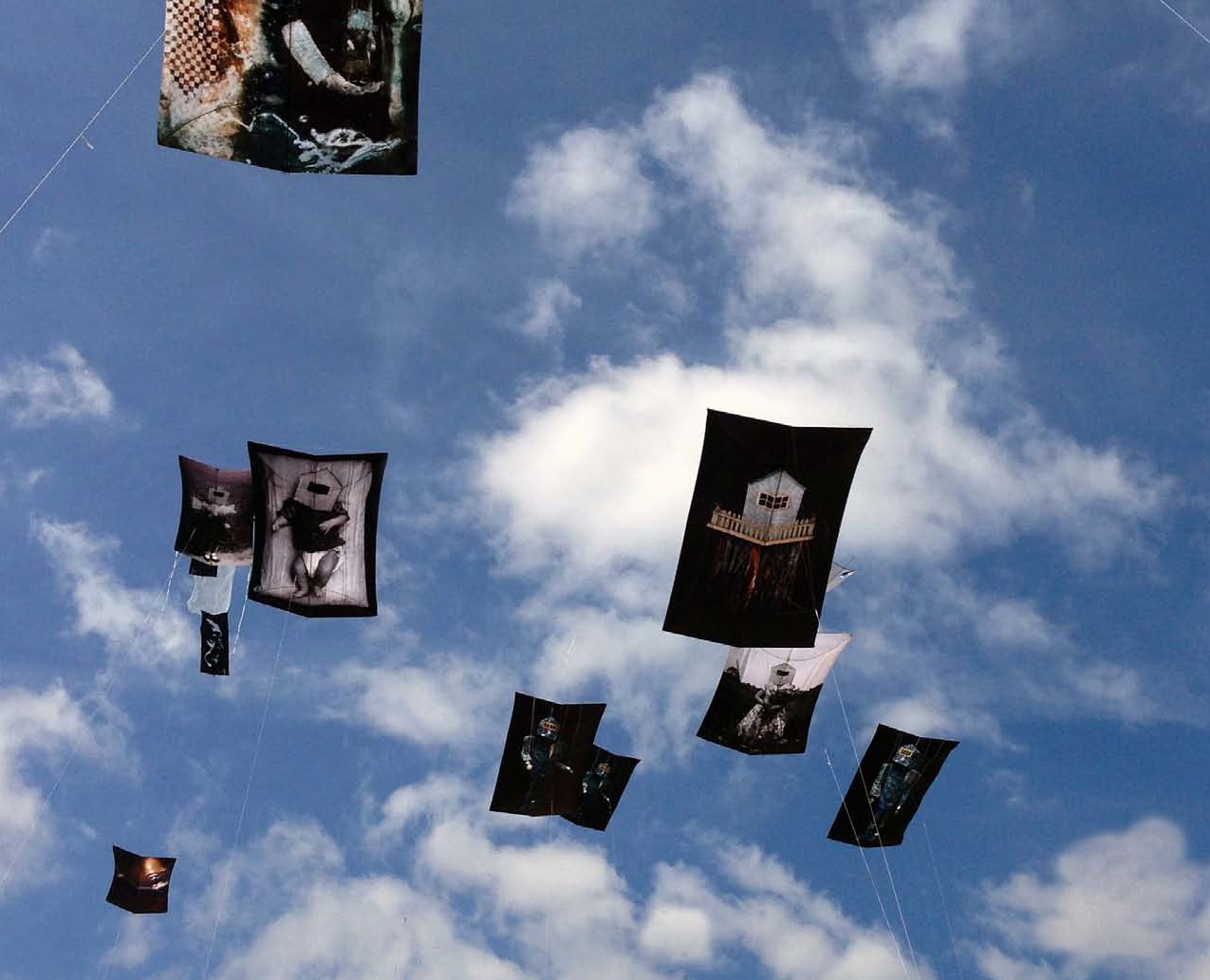
A flying installation of Melanie’s Househead Chronicle kites. “I love making the visions I see in my head and turning them into something out in the world. I love being able to see and feel the wind. Making ideas that can literally fly.”
WHY PHOTOGRAPHY?
I love alchemy. The fact that light can be recorded onto silver or two iron salts can become light sensitive. That a moment in time can be isolated and saved for reconsideration. I also love light.
WHY TEACHING?
I never wanted to give up on having access to all those tools available at the university. I love sharing and trying to get people excited about ways to tell stories, to show their world views, artistic activism.
WHAT IS YOUR FASCINATION WITH KITING?
I love making the visions I see in my head and turning them into something out in the world. I love being able to see and feel the wind. Making ideas that can literally fly.
WHAT WAS YOUR INTRO INTO KITING?
My first introduction to kiting was when I was a child and made box kites with my father. There was actually a Chevy advertisement that my father did back in the late ‘50s, in which I am standing on a hill with a collie watching a boy fly one of the kites my father and I made together. Many years later, my installations included suspended elements like hanging house viewing boxes and other components. When kitemaker George Peters and I met, I was pulled back to kitemaking.
DETAIL YOUR WORK IN MAJOR ART INSTALLATIONS THROUGHOUT THE U.S.
I have been exhibiting my work all over the country since the 1970s and I have work housed in many major art collections around the U.S. including the Center for Creative Photography, Los Angeles County Museum of Art, San Francisco Museum of
Modern Art, Princeton Art Museum, and many others. Together with George Peters we have completed over 90 collaborative public art projects both nationally and internationally.
WHO WAS A MENTOR IN YOUR ART JOURNEYS?
I think I have always been in creative dialog with my father. After he passed, it took me a while to figure out how to continue my visual conversations with him but I think that is starting to happen. He never stopped growing and exploring. I have so much respect for that. And that he walked away from a successful freelance career to pursue his research and teach others about the medium he loved.
WHAT ARE YOU WORKING ON NOW?
Oh, too many things as usual. I am not very disciplined and neither is George so I struggle with being constantly distracted, but the two things I am most excited about that I am working on are a graphic novel that involves a fictional family I have made work about off and on for over 30 years (!!!) and some new kites that involve making cyanotypes on a strong kozo paper. Cyanotype is a sun printing process that uses two iron salts that become light sensitive when mixed. They produce a beautiful blue color.
I am also doing some photographic work using decayed or destroyed negatives from my father’s archive. It involves work he did for hire around the time I was born. On some of them, the decay is extraordinary.
OF YOUR WORK, WAS THERE SOMETHING THAT WAS PARTICULARLY YOUR FAVORITE?
The Househead Chronicle, an ongoing body of work that examines and questions notions of home, homelessness, overpopulation, tradition, and family. Food, water, and shelter have long been considered basic human needs. Using the image of a house and the conceptual framework of home as metaphor, I seek to offer pictorial access to the longing for connection. The substitution of a house for a head implies a reality without being specific. It allows fabrication of a world and a narrative that occurs only in the photograph. Delving into the fantastic and the banal, the work addresses fictional metaphors for experience and emotion. Within this work I seek to create a theater where the ridiculous, the poignant, and the unexpected can be acted out through imaginary and whimsical associations that portray life on the lyrical edge of sense and non-sense.
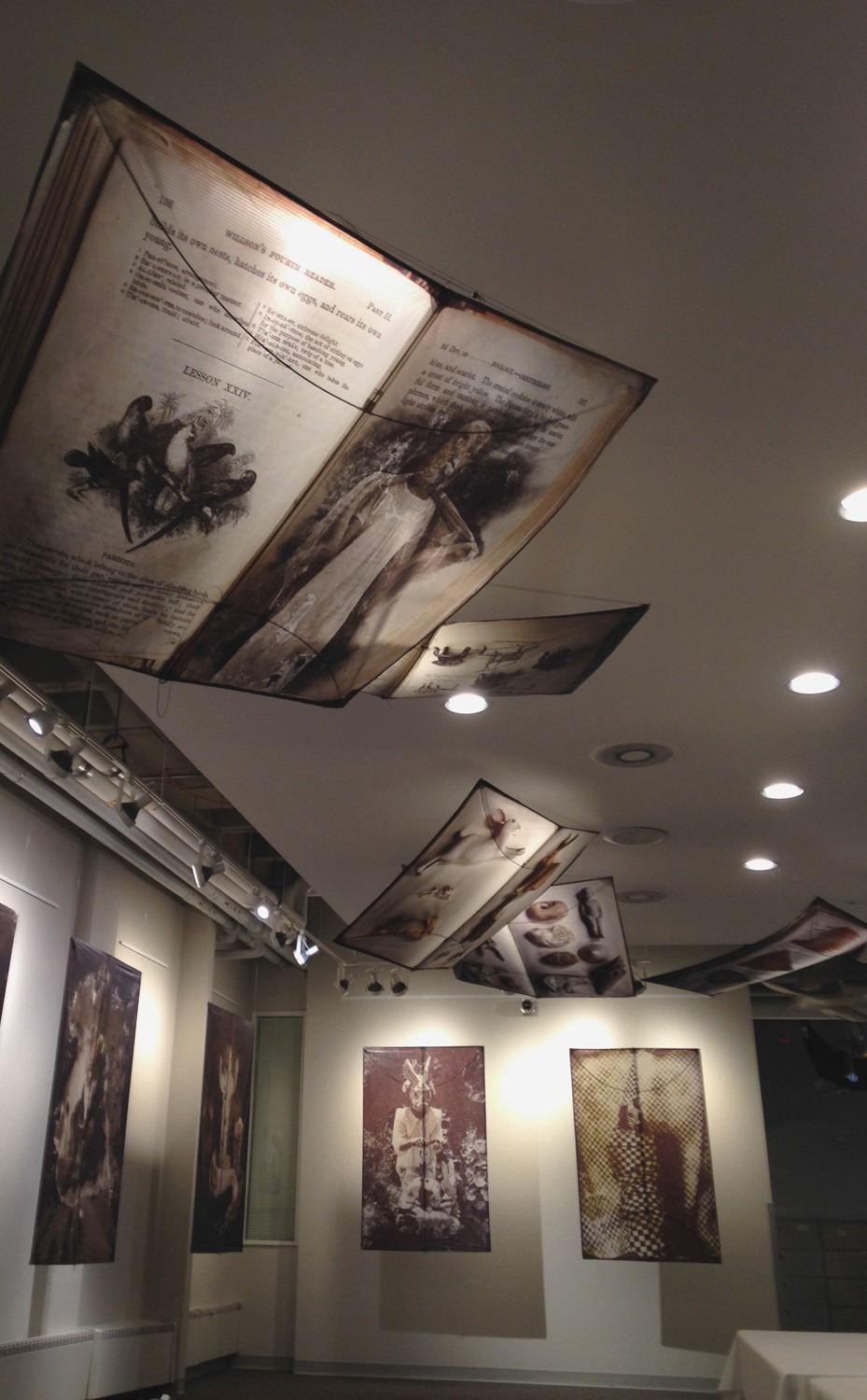
An installation of the Househead Chronicle, an ongoing body of work that examines and questions notions of home, homelessness, overpopulation, tradition, and family.
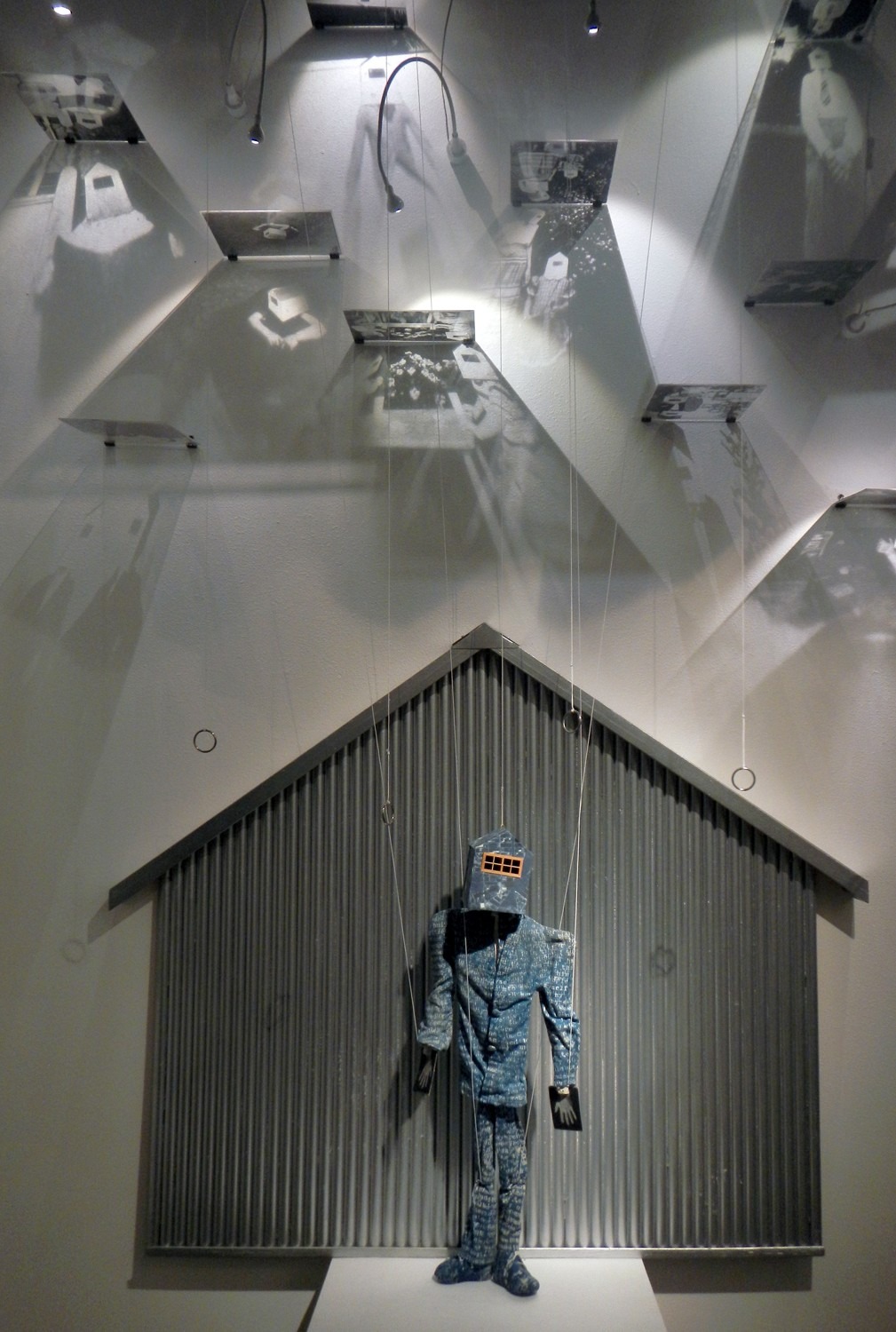
An installation of the Househead Chronicle, an ongoing body of work that examines and questions notions of home, homelessness, overpopulation, tradition, and family.
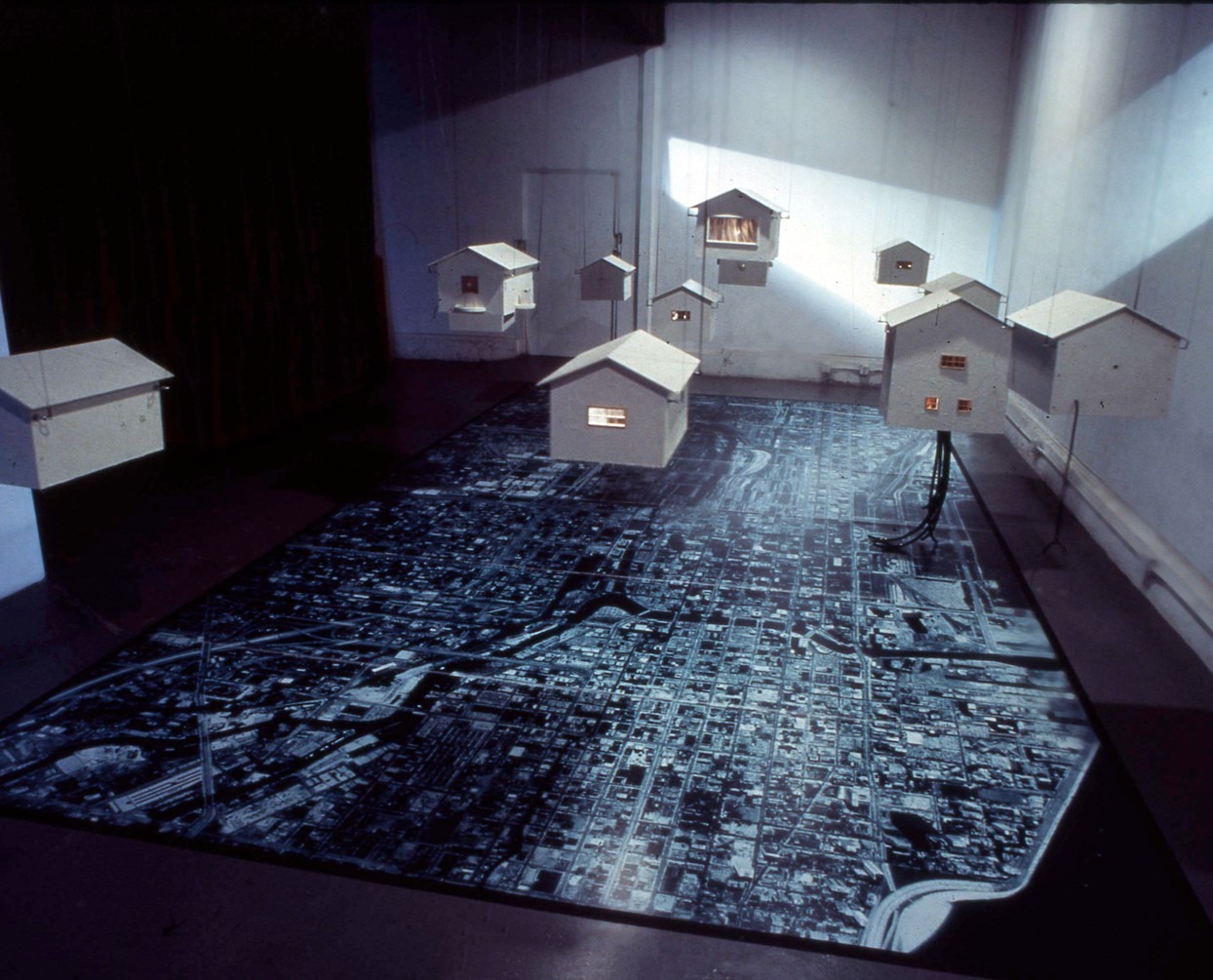
“Using the image of a house and the conceptual framework of home as metaphor, I seek to offer pictorial access to the. longing for connection.”
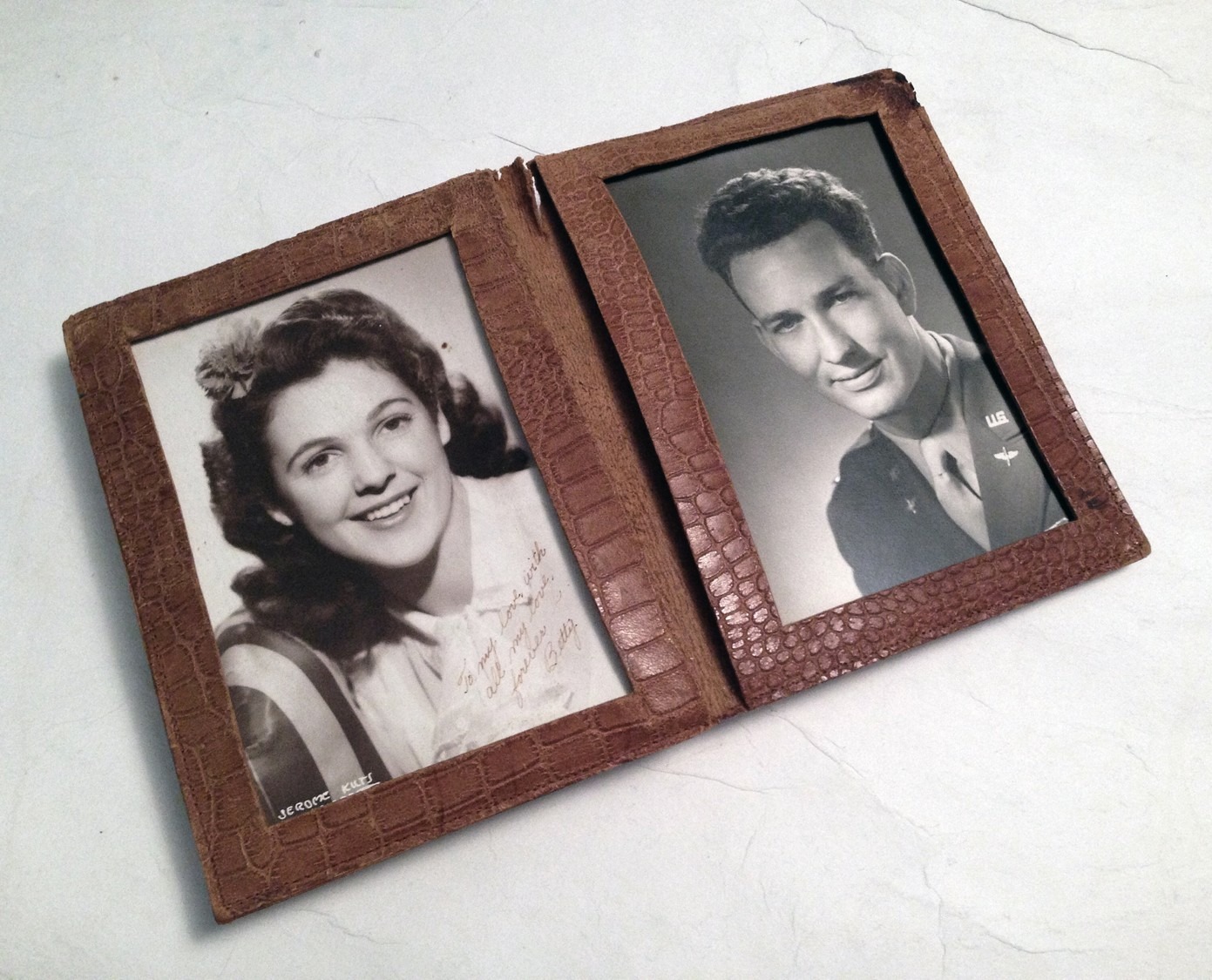
Photographs of artist Melanie Walker’s mom and dad. “I was brought up in an art family so I had nothing but encouragement for my artistic endeavors.”
The series consists of two complementary forms: a suite of photographs and a range of installation components including shadows, kites, puppets, quilts, and images printed on sheer silk.
Throughout this body of work I have chosen to work with approaches that might be considered childish or playful. There is a rich political history in puppetry and kites have a way of drawing people in. I am interested in the tension that can exist when serious issues are brought forward in a manner that is disarming.
This approach relates directly to my first memory which involved eye surgeries associated with my birth defect. I was born legally blind in one eye and had eye surgeries at age three. I woke up alone after the surgery strapped in a bed with an eye patch over one eye to see a chimpanzee wearing a band leader’s uniform riding down the hospital hallway on a tricycle. This memory has been integral to my approach to making work.
WHAT IS YOUR EDUCATIONAL BACKGROUND?
I went to undergraduate school at San Francisco State University for my BA and Florida State University for my MFA. I have been very fortunate to have continually held a teaching position since I graduated in 1975. ◆