

 Share
Share Print
PrintMartin Lester
From Discourse 9
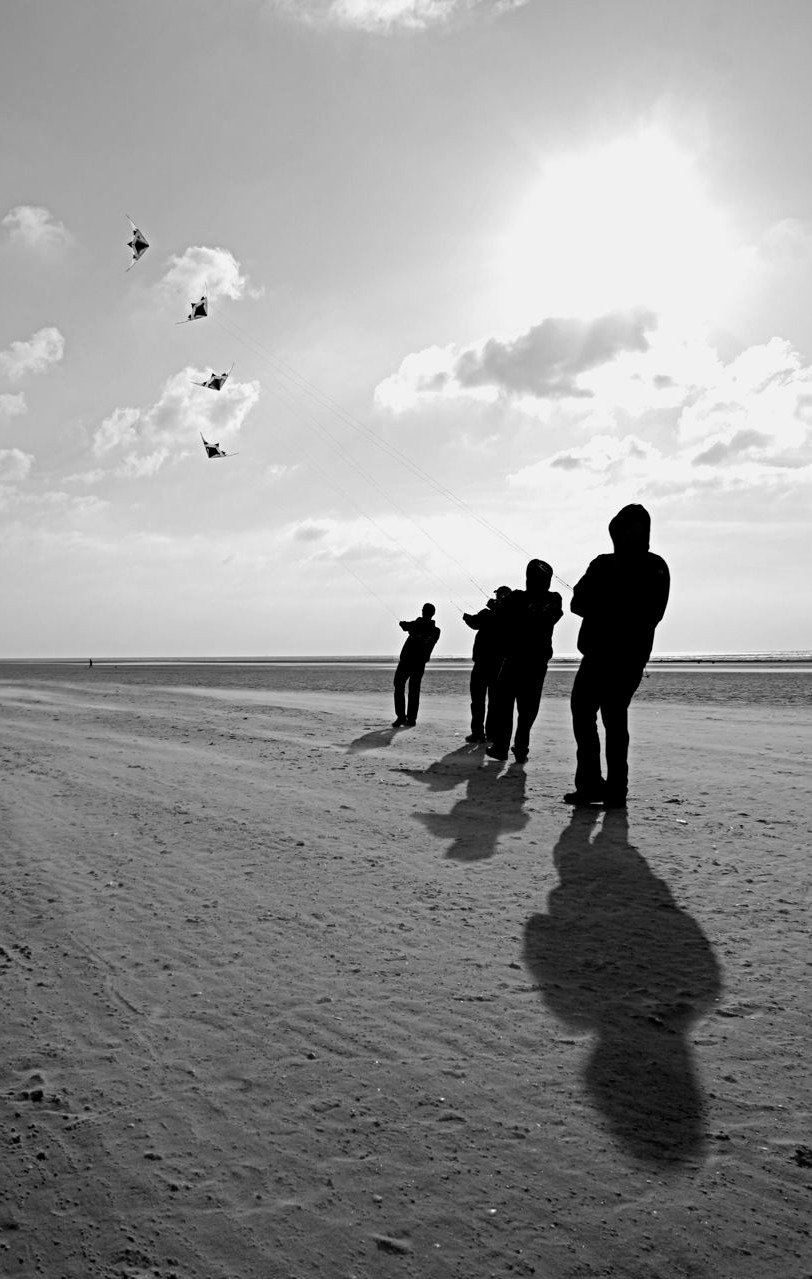
Sasha Reading. Kite Related Design kites, designed by world champion kite flier Carl Robertshaw.
EDITOR’S NOTE: In our last issue, we introduced the kites of Heather and Ivan Morison. Experienced kite-man Carl Robertshaw helped the Morisons produce a large- scale, tetrahedral-style kite – a “Meteor Kite” – that debuted at 2009’s Bristol International Kite Festival. Read more about their collaboration in Discourse issue 8: http://www.drachen.org/pdf/august10-discourse.pdf
ML: HOW DID YOU INITIALLY MEET HEATHER AND IVAN MORISON?
CR: I was contacted by Ivan Morison in September of 2008. He also contacted Cameron Balloons. He was looking into the feasibility of flying either a hot air balloon or large kite, shaped like a meteor, that could be flown over the city for the Venice Biennale.
WHAT STRUCK YOU ABOUT THEIR IDEAS THAT MADE YOU WANT TO COLLABORATE?
I’m fascinated by opposites and contradictions – an object that appeared to have great mass, yet floats in air. This has a real attraction for me. After discussing ideas, materials, and sizes, I set about getting my head around how this could be achieved. It was a puzzle and a challenge – a good place to start. If it hasn’t been done before, that either means it’s a stupid idea or a really good one! This was an opportunity for the studio to explore a theme that we had been talking about for a couple of years: making a kite that is not pretty and should challenge the normal perception of kites. Too many kites are “cute,” garish, or cartoon-like – this meteor would oppose those preconceptions. The facets in mineral stones are like the facets of the F117 Nighthawk stealth aircraft. The kite would have surfaces like this that confuse and disguise the symmetry of the structure.
HAS YOUR COLLABORATION LED TO ANY INSPIRATIONS IN YOUR OWN KITE MAKING?
The kites and structures we make all follow a simple concept. This concept transcends many industries, so we are able to work with many inspiring people and projects. We don’t make many kites, but we stay close to the idea that everything should use the same structural language as kites and should draw closely on the experiential aspects of kites and the kite world. Kite Related Design (KRD) were commissioned for this approach and the work shows how strong the concept is.
The Meteor Kites transcend the kite world. They are exhibition pieces, sculptures in their own right, while existing as true kites that adhere to the laws of physics. This makes them very exciting pieces of work. They are not fake – in concept or physical realization – like some conceptual art.
The Meteor Kite flew at Bristol, where it had a great reaction. Someone I haven’t seen in years was in Bristol that year: Corey Jensen, someone who is never afraid to speak up. We met up in the bar later that evening to catch up on old times. The first thing he said to me was, “Carl, what the fuck are you doing?” This was the perfect compliment!
Working on the Meteor Kites and overseeing their design and development has reinforced my process and practice. It has informed the studio well for subsequent works. We had a very hard time making the kites. A lot of stress, hard work, and late nights went into the two Meteor Kites. We really pushed ourselves. Like many projects, we knew the results would be worth it.
CAN YOU GIVE CREDIT TO MEMBERS OF YOUR TEAM WHO CONTRIBUTED?
At KRD we have an eclectic mix of design backgrounds – from architecture to kites and art history to fashion. There are only 3 of us full time here in the studio with an ever expanding list of freelancers who bring their own specific individual skills. At the moment there are over 20 of us working on current projects.
IS THERE A “PERFORMANCE” ASPECT OF ERECTING AND FLYING THESE LARGE SCALE KITES?
Of course. Anytime you put a creation on display it is the exhibitor’s duty to consider the viewer. This applies to theater, music, cinema, sport, art, design, and so on.
There is a relationship between the audience and the performer. To be specific about kite events, even if you are just walking across an arena, there is the kiter, the organizer, and the audience. There should be an understanding between the different roles people are involved in – an acknowledgement, an awareness.
It is a very vulnerable place to be – in an arena, where you are open to all and every criticism and praise. The best kiters you see appreciate the mechanics at play when they display their kites.
It is the kiter’s responsibility to lead the performance, no matter what it is – single line kites, small or large, sport kite routines, or power kiters. Everyone is on show at some point and may become the main focus of attention. There is a responsibility of that person or team to respect their audience and give them the best of themselves, even if it just waving to acknowledge applause.
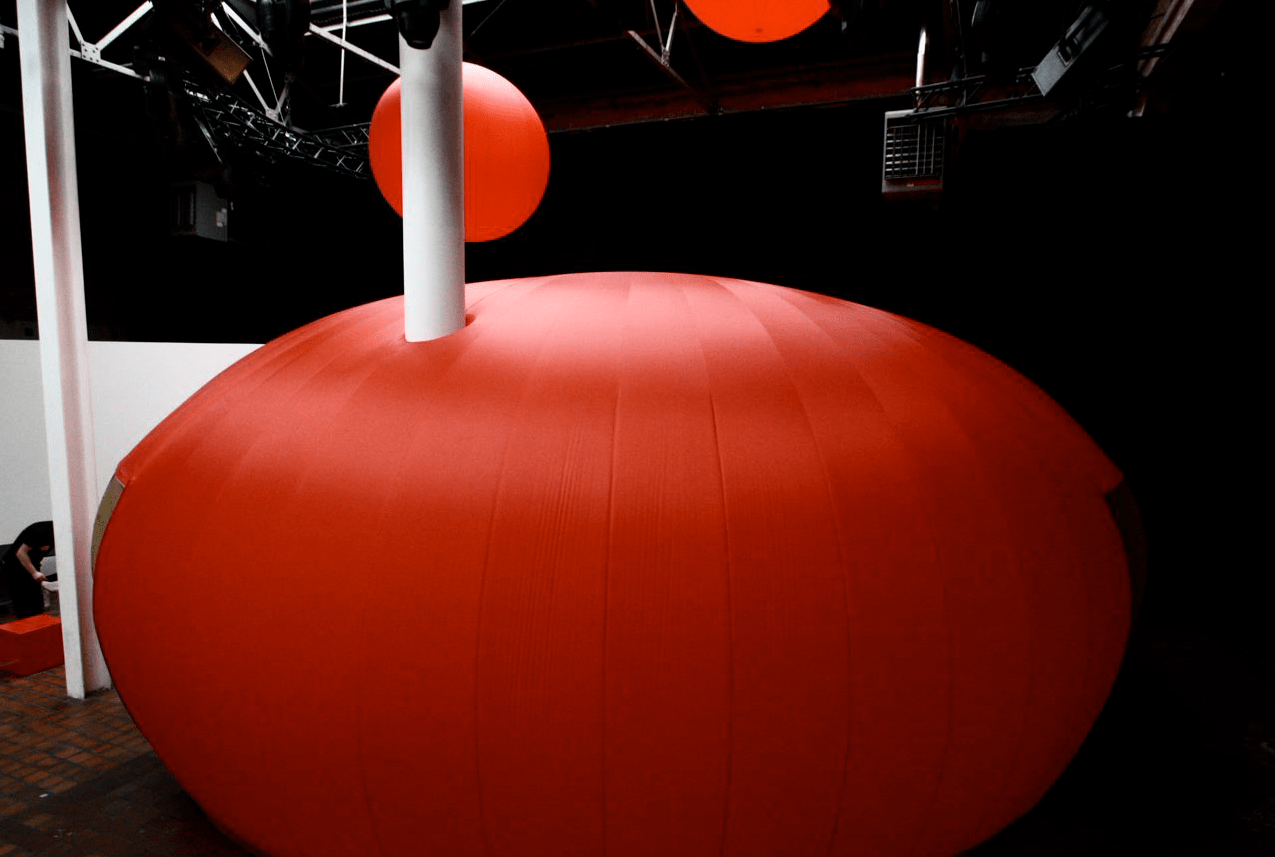
Kite Related Design. Robertshaw was commissioned to develop this installment for the UK launch of the Nissan Cube. The concept was to reflect a meniscus or molecular curve, a droplet of water on a horizontal surface. The inflatable single-skin sphere is shown at London’s Brick Lane Truman Brewery Gallery.
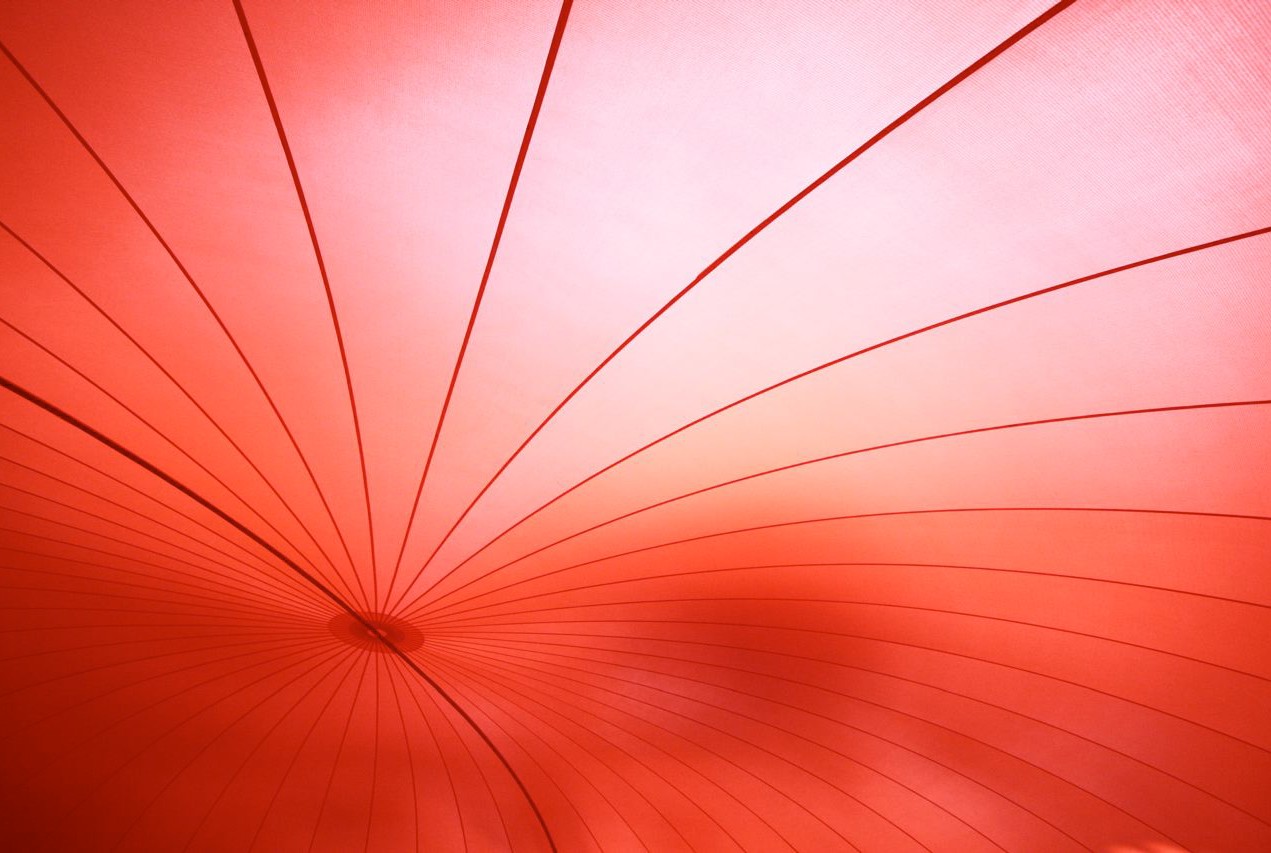
Kite Related Design. An inside view of the inflatable sphere.
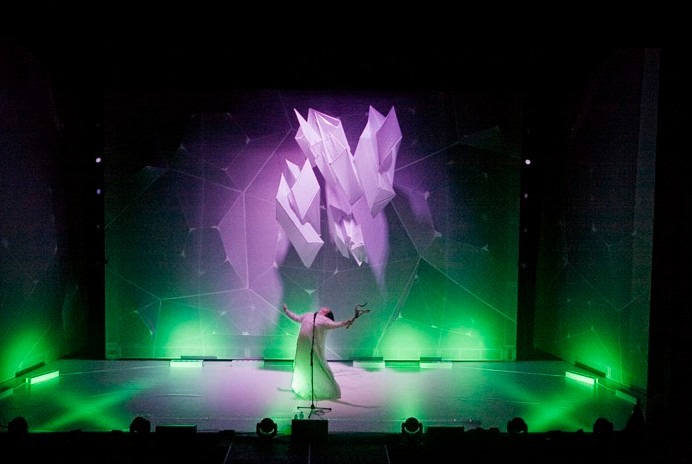
Kite Related Design. Robertshaw created structural and translucent set pieces for New York City music group Antony and the Johnsons. An illuminated crystal floats in the air as a focal point. Shown here at the 2009 Manchester International Festival.
DO YOU SEE ANY LIMITS TO THE CREATIVE POSSIBILITIES WITH THE MORISONS AND KITES?
We haven’t reached the limit of working with kites. Kites will always be at the center of our thinking in KRD.
I’ve seen friends move away from the kite world, and now moving back to it. Kites have a strong, positive, and versatile identity and one that inspires. Kites are and will always be inspiring to many people. There are so many physical and conceptual plus points with kites that it is hard not to be drawn in to their positive allure.
HOW DID YOU GET STARTED IN KITES?
As a child, parents, the usual story. It really started when I moved to London to study for a graphic design degree at St. Martins. The college was in Covent Garden then – right round the corner from the Kite Store!
The short version goes: college, kites, become obsessed, exchange course to Australia via Hawaii and High Performance, fly kites in Oz, make kites to earn some money, buy cheap ticket to the World Championships in Japan, meet more inspiring kite fliers, make friends with Top of the Line Kites (TOTL), back to London via San Diego to meet and fly with TOTL, make each design project a kite type project, help form team Airkraft, get totally obsessed, travel around the world competing, leave college with no professional direction (like many), more kites, make everything using kite materials, get small studio and work for myself.
Kites are a very natural occupation for me. I’ve always been fascinated with flight – planes, balloons, kites, and birds. I’ve always made things growing up, and we (brother James and myself) were always encouraged to draw and paint. Mum being a painter and Dad in graphic design. WHAT ARE YOU WORKING ON NOW?
We are busier than ever in the studio. We’re working on two stadium shows, an architectural scheme, and a major art installation at the Hayward Gallery on the South Bank here in London. We also have the Lord Mayors Show coming up (as we have for the previous 10 years).
The Hayward Gallery sculpture will be on display at the time this is published. At the moment it is being framed in the studio. We are very excited by the installation because it is the result of our first job with Amanda Levette Architects. The second project we have undertaken with them is a series of awnings and canopies for an all carbon fiber Super Yacht. Martin Lester is sewing up the panels, so we are staying close to our kite heritage.
When this article is published, these projects will be finished. We have several other projects we are procuring for 2011 that will see us work more internationally.
We have a definite system and sequence to produce our designs. It is based on a practical step-by-step sequence that allows creative exploration. Each piece of work informs the next.
The Meteor Kites were first exhibited in Blackpool, UK. They then travelled and were exhibited at the Royal Academy in London. Looking up at the kites in the gallery became the inspiration for the Anthony and the Johnsons stage set (see page 16) for the Manchester International Festival. This has subsequently become the inspiration for several jobs.
Visit Kite Related Design online: http://www.kiterelateddesign.com